


 Request an offer











 Weinerpark 16 | 48607 Ochtrup | Germany









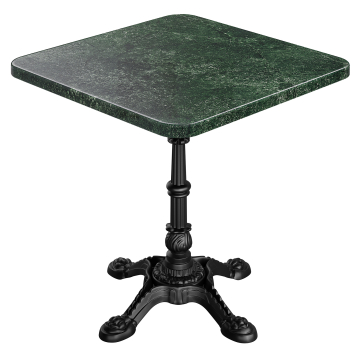

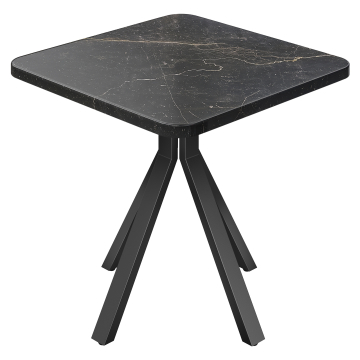
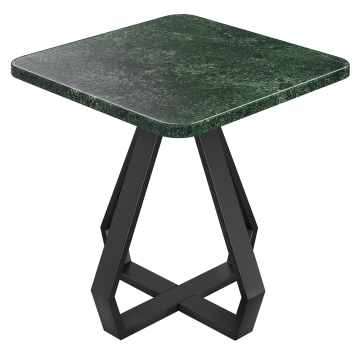


Marble Gastronomy Tables
Marble gastronomy tables combine a striking stone effect with the functional requirements of restaurants, cafés, bars and hotels. The category mainly includes table tops made of marble as well as marble-look versions, which are combined with suitable frames to create complete gastronomy tables.
 Filter
 Grid view
 Product view
 In line
 Masonry View
Marble restaurant tables between natural stone and marble effect
Marble restaurant tables are table solutions with a top made of genuine marble or with a marbled surface made from materials suitable for gastronomy. In this category, the table top is the main focus; combined with a suitable base frame, this creates a complete bistro, restaurant or lounge table.
Genuine marble appears individual due to its natural, non-repetitive veining and is particularly suitable for interiors where materiality is intended to be visible. Alternatively, versions with a marble effect are available, for example made from sintered stone, HPL or glass. This allows the characteristic stone pattern to be used even where maintenance, weight or suitability for outdoor use need to be considered more strongly.
Plan formats and spatial effect appropriately
Light marbling supports an open, calm spatial impression and works well in window areas, cafés and bright restaurant zones. Black or green marble effects create stronger contrasts and can be used to set targeted accents near bars or counters, in niches or in areas used in the evening. Edges in black, chrome, brass or copper effect further alter the overall appearance and should be coordinated with lighting, chairs and other metal surfaces.
For compact two-seaters, round tops of around 60 cm or square formats such as 60 x 60 cm are of interest. 70 x 70 or 80 x 80 cm provide more space for place settings and several guests; rectangular versions of around 120 x 70 cm are more suitable for full menus, breakfast or sharing concepts. The table surface is not the only decisive factor: chair backs, legroom, passageways and service routes must also be considered in the layout plan. Larger tops must not create a bottleneck between kitchen, bar and dining area. Square formats can be pushed together particularly well at the same height to form larger group areas, while round tops can guide movement more softly in narrow zones. For businesses with frequent table rotation, it is also important that service staff can easily reach the table edge and that chairs can be moved back without collision.
Material, care and assembly in everyday gastronomy
The type of material determines how a marble restaurant table should be cared for in daily operation. Natural marble requires cleaning tailored to the material and should not be unnecessarily exposed to acidic agents or strongly colouring liquids. Marble effects made from sintered stone, HPL or glass can, depending on the version, be easier to maintain; for terraces or outdoor areas, however, only the explicitly stated suitability for outdoor use counts.
Top thickness, weight and edge construction are also relevant. The range includes, for example, slim sintered stone versions of around 1.5 cm as well as thicker glass and composite constructions. During assembly, the support surface, type of fastening and permissible top size of the table base must match. Heavy or larger tops require a sufficiently dimensioned substructure; on uneven floors, adjustable glides help to align the table securely.
Decision criteria for marble restaurant tables
Four points should determine the selection: type of material and location, table shape and actual size, edge and surface effect, as well as the compatibility of top and base. Those who rearrange frequently should also consider weight and handling; those planning long evening stays should focus more on proportions and space for comfort.
Quick check for marble restaurant tables
- Include actual top size in the layout plan
- Define material care and suitable cleaning agents in advance
- Clearly check suitability for indoor or outdoor use
- Match base mount, footprint and fastening to the top
- Assess colour and grain in daylight and evening light
Combine harmoniously and think economically
Marble surfaces are more convincing when tables, seating furniture and room details follow a unified material logic. Light-coloured tops can, for example, be combined with slim gastronomy chairs, while dark or green marbling can support a calmer, more zoned atmosphere with upholstered seating or gastronomy benches. Those who do not wish to plan the top and base separately can consider suitable bistro tables as a ready-coordinated alternative.
Well-maintained, stable and harmonious furnishings can enhance the perception of cleanliness, quality and comfort. If guests feel comfortable with the furniture, they may stay longer, be more likely to order again or return; this can result in a positive operational effect, even though higher turnover is not guaranteed by the table alone.
Marble gastronomy tables should therefore not be selected solely based on grain or colour. Only the interplay of material, format, location, care and base makes the table solution permanently meaningful in daily gastronomy operations.



















