


 Request an offer











 Weinerpark 16 | 48607 Ochtrup | Germany









Swiss Edge Table Tops


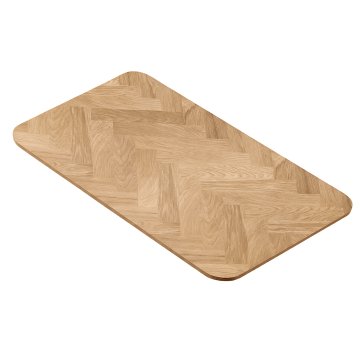


Swiss Edge Table Tops
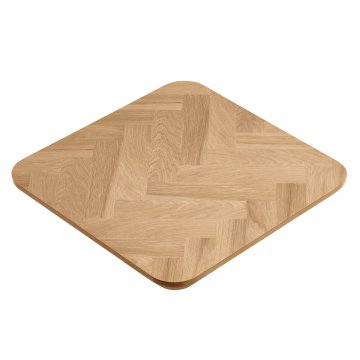
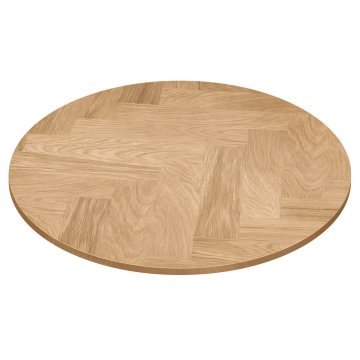
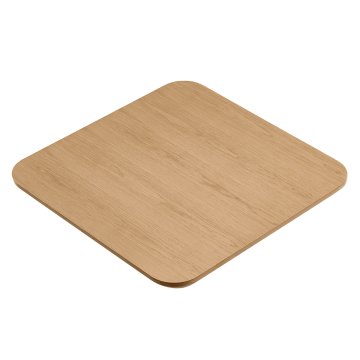
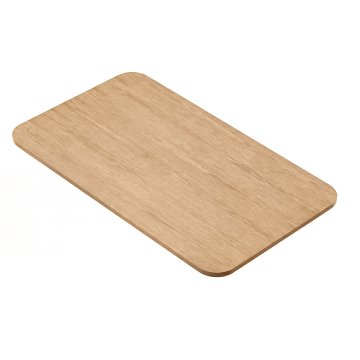
Swiss edge table tops combine a visually slim, downward bevelled edge with the functional requirements of professional gastronomy tables. Various shapes, surfaces and finishes enable coordinated planning for dining areas and suitable outdoor spaces.
 Filter
 Grid view
 Product view
 In line
 Masonry View
Swiss Edge: Slim Appearance for Restaurant Tables
Swiss edge table tops feature an edge profile that is bevelled downwards. This preserves the usable surface area of the top, while the visible outer edge appears slimmer and gives the table a light, clearly defined silhouette.
This edge shape is particularly suited to modern, Scandinavian-inspired and understatedly elegant dining spaces. In the window areas of a café, it can make small table groups appear less compact; in a brasserie, it supports a calm overall look of wood effect, metal frame and clean lines. Even near the bar, the reduced profile can help visually organise closely placed tables without making the zone appear heavy. Compared to a straight edge, the top appears more delicate, while it distinguishes itself from an irregular live edge by its controlled, precise form.
Coordinate Formats and Space Planning Sensibly
For planning, it is not just the edge that matters, but the interplay of shape, dimensions and base. Compact formats such as 60 x 60 or 70 x 70 cm are suitable for two-seaters and areas with faster turnover. Rectangular versions such as 120 x 70 or 130 x 80 cm offer more space for menus, serving ware or small groups. Round versions can facilitate conversation and create softer walkways in open zones.
When arranging, chair backs, legroom and service routes should be checked together. A visually slim top does not automatically save floor space. Sufficient distances between table rows, clear walkways to the kitchen and a frame that does not unnecessarily restrict foot space remain crucial. If two-seater tables are regularly pushed together, the edge profile, top height and frame position should allow for a uniform group setup. Under realistic lunch and evening lighting, it is also worth checking whether the surface causes glare, the grain appears calm and the edge looks clean from typical viewing angles.
Material, Surface and Assembly in Everyday Operations
The GGM range includes Swiss edge table tops with real wood veneer as well as smooth or herringbone patterned surfaces. Core panels are available, for example, in oak, walnut or black and with top thicknesses of around 25 to 30 mm. For suitable outdoor areas, there are HPL-coated versions, for which the material structure and manufacturer's specifications must be explicitly checked for both indoor and outdoor use.
For frequent wiping, mild cleaning agents and soft cloths are advisable. Abrasive sponges or aggressive chemicals can impair the coating and veneer surface; standing moisture should be removed promptly, especially at joints and edges. In high-traffic areas, regular visual checks for impact marks, loose fixings or damaged edge areas are also worthwhile. Before assembly, it should be clarified whether pre-drilled holes are present. For tops without pre-drilled holes, screw length, drilling depth, bearing surface and hole pattern of the frame must match to ensure the bevelled edge zone is not damaged and the top is securely supported.
Decision Criteria for Swiss Edge Table Tops
The selection can be determined by five points. Firstly, the edge profile determines how slim the top appears from the front and whether rounded corners are sensible for high-traffic areas. Secondly, the format and proportions must suit the typical order. Thirdly, the location determines whether veneer, HPL or another suitable surface is appropriate. Fourthly, smooth, wood or herringbone looks influence the interplay with flooring, light and wall colours. Fifthly, the top must technically fit the frame and the intended load.
Quick Check
- Edge profile and corner design suitable for the walkway area
- Table format matched to two-seaters, groups and crockery requirements
- Material approval checked for indoor or outdoor use
- Care instructions compatible with the existing cleaning routine
- Frame mounting, screws and support surface compatible
Combination, Spatial Effect and Operational Benefit
Swiss edge table tops are particularly harmonious with understated table frames whose construction does not conceal the slim table line. Suitable chairs can pick up the material colour or create a deliberate contrast through upholstery and metal. If you do not wish to plan table top and base separately, you can compare adjacent bistro tables as a fully coordinated alternative.
A stable, well-maintained and aesthetically suitable table solution can support the perceived value of the dining area and comfort at the table. This can help guests to sit more relaxed, order again or revisit the establishment; however, an operational effect always also depends on service, offering, price level and overall concept. Swiss edge table tops are therefore particularly sensible when the slim look is combined with robust mounting, a suitable surface and effective space planning.



















