


 Request an offer











 Weinerpark 16 | 48607 Ochtrup | Germany









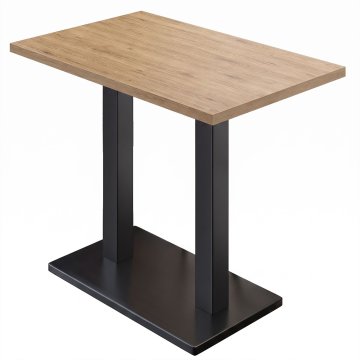
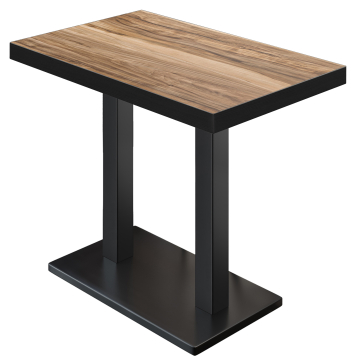


Standing Tables
Standing tables create compact spaces for drinks, snacks and short stays in bars, cafés, restaurants and event areas. Different shapes, sizes and surfaces allow for targeted coordination with the room concept and intended use.
 Filter
 Grid view
 Product view
 In line
 Masonry View
Standing tables as flexible hospitality spaces
Standing tables are elevated tables for use while standing or together with matching bar stools. In hospitality businesses, they create compact spaces for drinks, snacks and short stays, without replacing a classic seating group.
They are particularly useful near bars and counters, in entrance or waiting areas, and in zones with rapid turnover. Round models appear communicative and can be used well as individual meeting points; square and rectangular versions are more easily arranged along walls, window axes or in straight rows. At GGM Möbel, the selection ranges, among others, from compact 60 x 60 and 70 x 70 cm to formats such as 120 x 70 cm as well as round versions with Ø 60, Ø 70 or Ø 80 cm.
Space planning, height and service routes
The elevated table position significantly changes the zoning. Standing tables can visually extend a bar area, form a waiting buffer or mark an active zone between classic seating areas. Typical models are approximately 108 to 110 cm high. If the table is combined with bar stools, seat height, footrest and distance to the tabletop must match.
The footprint of the base is also crucial. A compact table is of little use if large bases narrow a passageway or overlap with neighbouring bases. Therefore, plan not only the tabletop width, but also the footprint, movement space and service route. For rectangular formats such as 110 x 60 or 120 x 70 cm, you should also check on which side guests stand or sit and whether trays can be passed by without difficulty.
Material and surface for everyday hospitality use
Standing tables are often used as a place to set things down and are wiped accordingly often. Stains, drink rings, knocks on the edges and varying loads are part of everyday life. The range includes, among others, HPL-coated as well as real wood veneer surfaces, various decors and tabletop thicknesses of 25 or 50 mm. Black or stainless steel edges change both the appearance and the effect of the tabletop in the room.
For heavily frequented zones, the surface should be easy to care for, edge-stable and matched to the cleaning routine used. Wood and wood-look finishes appear warmer, while dark or metallic details tend to look more functional and bar-oriented. For permanently unprotected outdoor areas, specifically outdoor standing tables with suitable materials should be chosen.
If you plan tabletop and base separately, you should not combine hospitality tabletops and table bases based on design alone. Tabletop size and weight, mounting area, fixing points and the footprint of the base must all fit together; the respective product information is decisive before assembly.
The most important selection criteria
Shape and proportion determine how a standing table fits into the space: round makes it easier to approach from several sides, square makes good use of compact grids, rectangular offers more storage space along one axis. The size should suit the intended use – a Ø-60-cm model functions differently from a 130 x 80 cm high table. Table height, base footprint and surface care are equally important. If you move tables frequently, you should also consider weight and, if necessary, a foldable version.
Quick-Check
- Define usage zone: bar, waiting area, event space or fast hospitality zone
- Adjust tabletop shape to room grid and desired number of people
- Check the base footprint against passageways and walkways
- Select surface according to risk of stains, frequency of wiping and indoor or outdoor use
- For bar stools, plan height ratio and comfortable foot position
Standing tables as part of the economic space concept
Standing tables can create additional, low-threshold spaces, for example for a quick coffee, an aperitif, or waiting guests. A stable, well-maintained and concept-appropriate design supports the perception of quality. If guests feel comfortable at these spots, this can encourage longer stays, repeat orders or a later return; higher turnover is a possible consequence, not an automatic effect.
What is economically relevant is therefore not the maximum number of tables, but their appropriate use throughout the day. In a bar, a small standing table can complement the drinks area, while in a café, a few high tables near the window enable quick use without overloading the main guest area.
Harmoniously combining standing tables
A convincing standing area is created through suitable heights, materials and spacing. Black frames, for example, can be calmly combined with wood decors, while stainless steel edges set a clearer accent. Bar stools should only be added where longer use is desired and sufficient space for movement remains.
Standing tables are particularly suitable when a hospitality venue wants to create compact, communicative and flexibly usable zones. The right choice results from the shape, height, surface, frame and actual use in day-to-day operations.



















