


 Request an offer











 Weinerpark 16 | 48607 Ochtrup | Germany









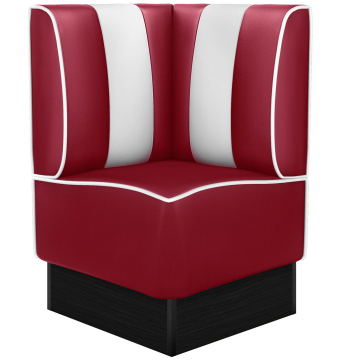
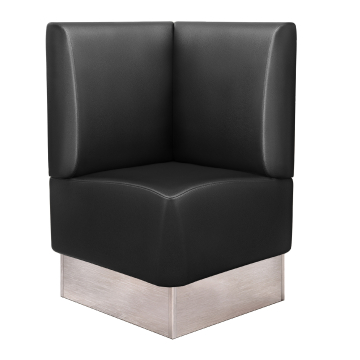
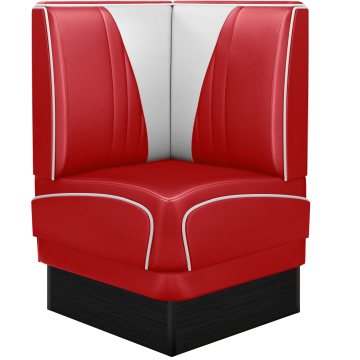


Faux Leather Restaurant Benches for the Hospitality Industry
Faux leather restaurant benches combine upholstered seating comfort with an easy-care surface for restaurants, cafés, bars and other hospitality businesses. Various widths, colours and backrests allow for targeted coordination with room concept, usage and desired length of stay.
 Filter
 GGM ansicht
 Grid view
 Product view
 In line
 Masonry View
Faux Leather Restaurant Benches as a Clear Line in the Dining Area
Faux leather restaurant benches are upholstered benches for commercial use, whose seat and back surfaces are covered with faux leather. They are particularly suitable for dining areas where comfort, a cohesive appearance and quick cleaning should come together.
Placed along a wall, the benches create a calm, continuous seating line. In a niche, they can form a clearly defined area for couples or small groups. Dark models in black, anthracite or brown often support modern bar and restaurant concepts. Beige, taupe or light grey tones appear more restrained and can make smaller rooms seem less heavy visually.
The backrest also shapes the style. A smooth surface appears straightforward and can usually be wiped clean easily. Vertical seams, diamond quilting or button tufting create stronger accents, but require more attention during cleaning in folds and recesses.
Planning Faux Leather Restaurant Benches Correctly in the Room
Before making a selection, not only the available wall length but also table size, seat depth and service routes should be checked. A wide bench creates additional seating, but can make the room feel cramped if tables protrude too far into the passageway.
There must be sufficient space between the table edge and the bench for comfortable sitting and standing up. On the opposite side of the table, space for pushed-back restaurant chairs must also be considered. Especially in passages to the kitchen, at service stations or near the bar, waiters should be able to pass with trays without touching guests or chair backs.
For free-standing models, it is also important whether the back is fully upholstered and designed for visible use. If several elements are connected, the base, fittings and screws should be suitable for the planned arrangement. On uneven floors, stable feet or a neatly aligned plinth help to avoid movement and disturbing wobbling.
Quick Check for the Suitable Faux Leather Restaurant Bench
- Does the seat height match the intended restaurant tables?
- Are table distance, legroom and service aisle sufficiently large?
- Is a smooth or quilted backrest more sensible for cleaning and style?
- Is a visible, fully upholstered back required?
- Do colour and bench width suit day and evening operations?
Faux leather in daily hospitality operations
The main advantage of faux leather lies in its closed surface. Liquids, crumbs and many typical types of dirt can usually be removed more quickly than from open-structured textiles. This is particularly relevant in high-traffic areas, with short changeover times and regular cleaning.
Nevertheless, the specific material quality is crucial. Frequent wiping, moisture on seat edges, friction from clothing and bags, as well as knocks from vacuum cleaners or cleaning equipment put strain on the cover, seams and substructure. Aggressive cleaning chemicals or unsuitable agents can damage the surface. Therefore, the care instructions for each model should always be observed and soiling should be removed as promptly as possible.
For heavily frequented areas, a design with easily accessible surfaces and as few deep folds as possible is recommended. Models with a closed plinth prevent objects from collecting under the bench. Variants with legs, on the other hand, make it easier to clean under the seat area depending on the floor height.
Choose seating comfort according to length of stay
Not every hospitality bench needs to be particularly soft. In the busy lunchtime trade, a rather firm upholstery supports upright sitting and facilitates rotation. For longer evening visits, menus or drink orders, a well-supporting backrest and a balanced seat depth are more important.
In restaurants and cafés, faux leather hospitality benches can be specifically combined with upholstered chairs. The bench creates a fixed room edge, while chairs on the opposite side remain flexible. For larger groups, several tables can be arranged along a bench, provided that table widths and bases offer sufficient legroom.
How furnishings influence perception and operations
A well-maintained, stable bench that matches the room supports a professional overall impression. Guests immediately notice clean surfaces, comfortable seating positions and sufficient spacing. These factors can help ensure that conversations are more relaxed, guests feel comfortable for longer and are more likely to visit an establishment again.
At the same time, the operational side counts. Easy-care surfaces reduce cleaning effort between seatings. Sensible wall placement keeps the centre of the room clear and can simplify routes for service. Therefore, the most economically sensible solution is not the largest possible number of seats, but a layout that balances comfort, occupancy and workflows.
Harmoniously combine faux leather hospitality benches
For a uniform overall appearance, bench colour, table top, frame and existing furniture should be coordinated. Dark faux leather often harmonises with black metal frames or dark wood decors. Cognac and brown tones go well with warm wood surfaces. Light covers can be combined with understated table frames and look particularly calm in well-lit rooms.
Faux leather hospitality benches should be selected according to room dimensions, cleaning routine, length of stay and desired style effect. A carefully planned design supports both guest comfort and a reliable workflow in daily hospitality operations.



















