


 Request an offer











 Weinerpark 16 | 48607 Ochtrup | Germany









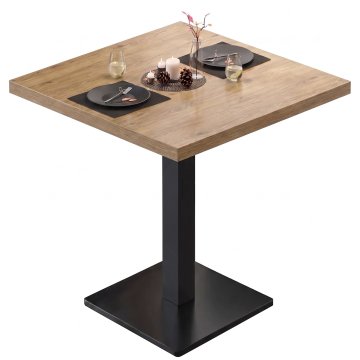


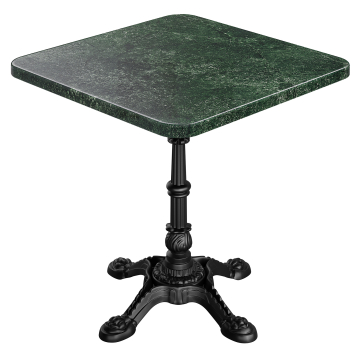


Square Restaurant Tables
Square restaurant tables create clearly structured seating areas for restaurants, cafés and bistros and can be used flexibly either individually or in groups. Various sizes, surfaces and frame variants allow for a selection to suit the space, usage and gastronomic concept.
 Filter
 Grid view
 Product view
 In line
 Masonry View
Using Square Restaurant Tables Purposefully in the Space
Square restaurant tables are compact restaurant and bistro tables with sides of equal length, which are particularly well suited to being placed individually or combined into larger table groups. They are ideal for restaurants, cafés, bistros and other dining areas where a clear room structure and flexible seating arrangements are required.
The straight geometry supports a calm, orderly room appearance and can be used effectively along walls, window axes or in regular table rows. Formats such as 60 x 60 cm, 70 x 70 cm or 80 x 80 cm differ significantly in their effect: Smaller surfaces are more suitable for compact two-person situations, while larger squares provide more space for crockery, drinks and more extensive place settings. Especially in areas with rapid turnover, the square shape can help to zone spaces in a comprehensible way.
Planning Dimensions, Legroom and Flexible Table Groups
It is not only the tabletop that is crucial, but also the space around the table. Chairs must be able to be pulled back, service staff need clear walkways, and guests should not collide with neighbouring tables. Especially with 60 x 60 cm or 70 x 70 cm, it is therefore worthwhile to realistically check with the intended place setting and the appropriate chairs.
One advantage of square restaurant tables is their combinability. Two tables of the same size can be put together for larger groups and separated again after the visit. Table heights, top thicknesses and edges should fit together as flush as possible. The base is also important: A central column can provide more legroom, while other frame types offer advantages depending on the footprint and floor. On uneven floors, adjustment options on the frame are particularly relevant.
Materials, Surfaces and Bases in Everyday Restaurant Use
In daily operation, table surfaces are frequently wiped and come into contact with moisture, grease, drinks, hot plates and knocks on the edges. Coated surfaces are therefore of interest when quick cleaning and a uniform appearance are the priority. Solid wood or veneer versions appear warmer, but require care appropriate to the establishment. Glass surfaces create a lighter spatial effect, but show fingerprints and stains more quickly.
For outdoor use, there are additional requirements for moisture and weather resistance. Here, it should be checked whether the tabletop and frame are expressly suitable for the intended location; for permanent terrace use, outdoor restaurant tables may be the more suitable category.
Those who select tabletop and base separately should pay attention to format, thickness and mounting options for restaurant tabletops and combine them with suitable table bases. The mounting surface, screw points and the size of the base plate must match the tabletop so that the finished table stands stable and tip-proof.
Important Decision Criteria for Square Restaurant Tables
Dimensions: 60 x 60 cm saves space, 70 x 70 cm is a common compact restaurant format and 80 x 80 cm offers more surface area for place settings.
Edge and Surface: Straight edges make it easier to place tables flush together; robust, easy-to-clean surfaces reduce effort with high frequency.
Base: The position of the column, feet or base plate influences legroom, chair placement and stability.
Location: Indoor areas, sheltered outdoor areas and open terraces place different demands on material and construction.
Quick Check
- Match table size with real place setting and desired number of people
- Consider lateral movement space for chairs and service
- Check edges for impact sensitivity and ease of cleaning
- Select frame size and mounting to suit the square tabletop
- For table groups, ensure equal height and flush edges
Spatial Effect, Guest Behaviour and Economic Benefit
Square restaurant tables can clearly structure a dining area and make it easier to adapt seating for two or four to different times of day. Near windows or along straight room axes, they create an orderly appearance; in flexible central zones, several tables can be combined into group areas as needed.
A stable, well-maintained and harmonious table solution can positively influence the perception of quality and the comfort of the stay. When guests feel comfortable, they tend to sit more relaxed, may order another drink or dessert, and are more likely to return. This can have a positive effect on average spend, repeat visits and turnover per seat hour, although this is not guaranteed by table shape alone.
When choosing, form, size, surface and base should therefore always be considered together with room layout and usage. This way, the square restaurant table becomes a flexibly usable element that contributes both to the design and to smooth operations in the dining area.



















