


 Request an offer











 Weinerpark 16 | 48607 Ochtrup | Germany









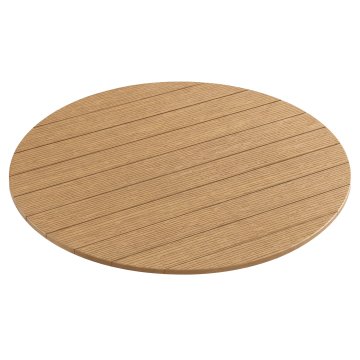


Teak Tabletops
Teak tabletops bring a warm, natural wood look to gastronomic outdoor areas. Choose shape, actual size and material structure to suit terrace, service process and table base.
 Filter
 Grid view
 Product view
 In line
 Masonry View
Correctly categorising teak table tops
Teak table tops are table surfaces for gastronomy and outdoor areas, whose visible decor or surface pattern reflects the warm, lively effect of teak. In the GGM Möbel range, the corresponding versions are made, depending on the series, from polywood, CDF or spruce wood in teak design; the material specification is therefore more important than the series name alone.
The brown-golden wood look supports natural, Mediterranean and modern terrace concepts. It is particularly harmonious at terrace edges, in sunny café zones or near windows, where the grain remains visible. Dark metal frames provide a clear contrast, while light chairs and textile elements make the overall appearance seem lighter. Under warm evening light, the surface usually appears richer than in neutral daylight, which is why patterns and surrounding colours should be assessed together.
Matching shapes and dimensions to the dining area
The shape determines how flexibly seats can be grouped. Round tops facilitate communication in small groups and avoid sharp corners in narrow walkways. Square formats are suitable for compact two-person tables and can be combined into larger units if required. Rectangular versions offer more space for plates, drinks and shared serving.
For planning, the nominal size is not the only factor. For selected polywood versions, a nominal size of 60 x 60 cm corresponds to an actual size of approximately 58 x 58 cm; for 120 x 70 cm, approximately 118 x 68 cm are specified. A round top with a nominal size of Ø 60 cm may actually measure Ø 58 cm. These differences should be taken into account for table spacing, chair movement and walkways, especially in densely occupied terrace zones. For coffee and small dishes, a compact format may suffice; for menus, tapas or shared platters, more usable depth is advisable.
Material structure, care and daily use
Teak table tops in this category combine the teak look with different construction types. Slim polywood tops with a thickness of 15 mm can be easily integrated into light bistro setups. CDF versions can have a total thickness of 42 mm and appear more solid due to their thicker edge. There are also spruce wood variants in teak design with a thickness of 35 mm.
For everyday gastronomy, the surface and edges should withstand frequent wiping, moisture, stains and impacts. Spilled drinks should be removed promptly and only suitable, mild cleaning agents used; aggressive chemicals can attack the decor or sealant. Before purchase, it should also be checked whether the chosen version is expressly intended for outdoor use and how it should be stored or protected during longer periods of bad weather. For fully sun-exposed locations, surface temperature and possible colour changes should also be included in the operating routine.
The most important selection criteria
For the material, it is important to consider whether polywood, CDF or spruce wood in teak design is better suited to weight, maintenance and the desired feel. For shape and proportion, two-seaters, group sizes and the required space for tableware are decisive. Actual size and tabletop thickness influence the distance to neighbouring tables, the visual presence and the handling when rearranging. The edge shape should suit narrow walkways and the expected impact load.
Equally important is compatibility with the base. Check the mounting surface, recommended tabletop size and stability of the table bases. Some CDF variants are not pre-drilled; screws and base may be required separately. The fastening must therefore be matched to the material thickness and mounting position.
Quick-Check
- Clearly distinguish material base and teak look
- Match nominal size with the stated actual size
- Coordinate shape for two-seaters, groups and service area
- Check outdoor approval and care instructions for the model
- Clarify base mounting, fasteners and tipping safety
Combining spatial effect and economic use
A well-maintained tabletop, stable connection and a uniform surface appearance shape the perception of quality as soon as guests take their seats. If guests do not feel cramped and drinks and food are placed securely, this can support the quality of stay and the willingness to order more. Flexible square or rectangular tops can also help to adapt the seating mix between quick lunchtime turnover and larger evening groups. An operational effect is possible, but always depends on the overall concept of service, menu, lighting and seating comfort.
For a cohesive terrace appearance, the tops can be combined with matching chairs or weather-suitable terrace furniture. Recurrent base colours and coordinated seat heights create calm in the space, while different tabletop shapes can visibly structure zones. Service routes should remain clear even after several tables have been joined together.
Selecting teak tabletops appropriately
What matters is the combination of desired teak effect, actual material, real size and suitable base. Those who compare these points before ordering with walkways, group sizes and cleaning routine create a reliable basis for harmonious gastro tables in outdoor areas.



















