


 Request an offer











 Weinerpark 16 | 48607 Ochtrup | Germany













Restaurant Tabletops
Restaurant tabletops combine the right surface with the requirements of daily catering operations. Select shape, size and material to suit the space, use, maintenance and table base.
 Filter
 Grid view
 Product view
 In line
 Masonry View
Restaurant table tops as the foundation of the dining area
Restaurant table tops are separate table surfaces for commercially used dining tables, which are combined with a suitable base to form a restaurant table. They differ mainly in terms of material, shape, dimensions, thickness, edge construction, and suitability for indoor or outdoor use.
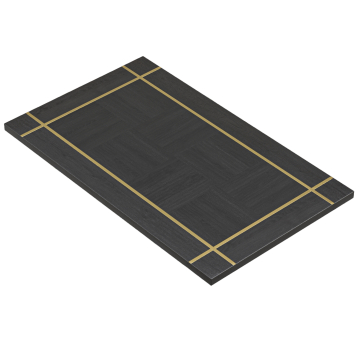
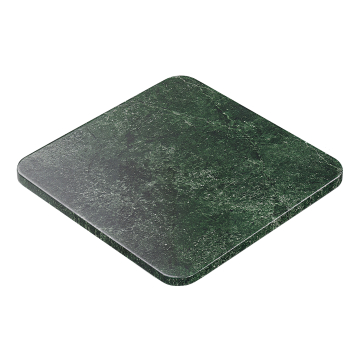
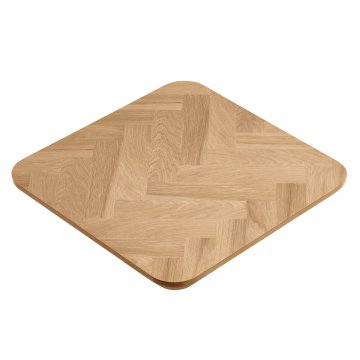
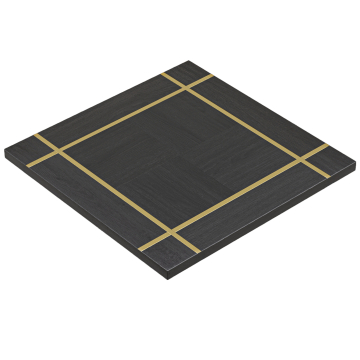
The tops shape a large part of the visible area in the dining space. Oak, oak veneer, and other wood looks support a warm, calm restaurant atmosphere; dark marble looks, glass, or slim sintered stone versions appear clearer and more modern. In window areas and niches, smaller formats can support subtle zoning, while larger rectangular tops in the main dining area provide space for several place settings and more extensive menus.
Plan shapes and dimensions to suit use and walkways
The shape should match the typical occupancy and the floor plan. Square restaurant table tops in 60 x 60 or 70 x 70 cm are often suitable for two people and can be pushed together into larger units with straight edges. Round versions with Ø 60 cm break up strict table rows and avoid protruding corners in more compact zones. Rectangular formats such as 120 x 70 cm typically provide space for four guests; 110 x 60 cm can be an alternative for narrow room proportions.
It is not only the number of possible seats that is decisive. Chair backs, legroom, service at the table, and walkways to the kitchen must all work simultaneously. Before ordering, the seating plan should therefore be checked with the intended chairs in the pulled-back position. For changing groups, square tops are usually easier to combine; fixed larger formats give the room more calm, but require more contiguous space.
Select material and surface for everyday restaurant use
Restaurant table tops are wiped daily and come into contact with moisture, grease, sauces, drinks, hot dishes, and knocks to the edges. HPL-coated or melamine-coated versions are of interest for care-oriented indoor areas. Solid wood and oak veneer bring a natural grain, but require appropriate care and controlled handling of standing moisture. Sintered stone can, with a slim thickness of about 1.5 cm, support a minimalist look; more robust solid wood tops of about 3.5 cm appear more substantial.
For terraces, only explicitly designated outdoor tops should be planned, for example HPL-Compact or suitable outdoor variants. The product information regarding water, sun, temperature, and cleaning is binding, as a wood look alone says nothing about weather resistance. The edge also deserves attention: it is particularly stressed when clearing, rearranging, and bumping.
The most important selection criteria at a glance
Four criteria lead to a reliable pre-selection. Firstly, the shape and proportion must fit the dining area and the desired group size. Secondly, the location determines suitability for indoor or outdoor use. Thirdly, surface and maintenance effort must be matched to typical soiling and cleaning routines. Fourthly, tabletop size, weight, support surface and mounting must fit the selected model from the table bases category.
Quick check for restaurant tabletops
- Arrange place settings, plate sizes and table accessories on the desired size as a trial
- Specifically check edges for impact sensitivity along busy service routes
- Assess decor under realistic midday and evening lighting
- Derive outdoor models not from appearance, but from designated use
- Test the need for rearrangement for couples, groups of four and events in advance
Coordinate assembly and combination safely
Depending on the model, restaurant tabletops are delivered without pre-drilling or without mounting screws. Before assembly, the drilling pattern, screw length, maximum tabletop size of the base and the required base plate must therefore be checked. A sufficiently dimensioned substructure and correctly tightened connections help to avoid wobbling and tilting; suitable adjustable glides are helpful on uneven floors.
For a cohesive interior concept, surface and edge colour should be coordinated with banquette seating, chair frames and floor material. If you do not wish to combine tabletop and base separately, you will find complete table solutions in the bistro tables category.
Combine perception and cost-effectiveness
A well-maintained, stable tabletop that matches the menu can support the perceived value of the restaurant. Sufficient space for place settings makes service easier, while a sensible mix of formats can allow flexible seating at lunchtime and quieter table situations in the evening. This can result in more pleasant stays, additional orders or higher return rates; however, the actual effect always depends on the overall concept, service and occupancy.
Restaurant tabletops should therefore not be chosen solely based on decor. The decisive factor is the combination of suitable size, appropriate surface, durable edge and compatible substructure, so that design and operations fit together in the long term.



















