


 Request an offer











 Weinerpark 16 | 48607 Ochtrup | Germany















Oak Table Tops
Oak table tops create a warm, natural table surface for restaurants, cafés, bars and hotel areas. Different shapes, sizes and surfaces allow for needs-based coordination with room concept, use and operational processes.
 Filter
 Grid view
 Product view
 In line
 Masonry View
Oak Table Tops as the Basis for Gastronomic Table Concepts
Oak table tops are separate table surfaces made from solid oak, oak veneer, or a durable surface in an oak look, which are combined with a suitable base frame to form a complete catering table. They combine a warm, natural appearance with the functional requirements of restaurants, cafés, bars, and hotel areas.
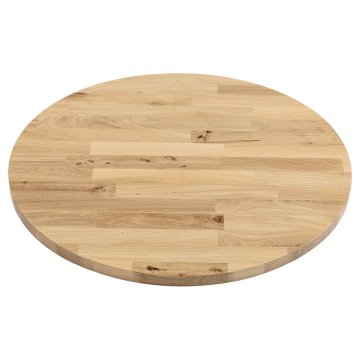
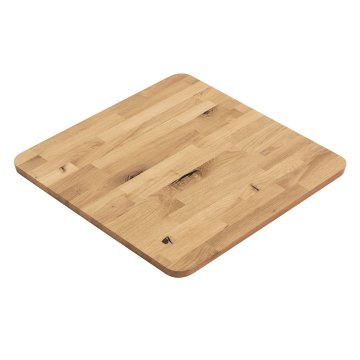
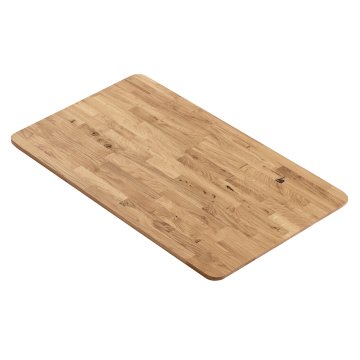
The distinctive grain supports rustic and classic concepts as well as modern spaces with metal, leather, or calm colours. Round tops with a diameter of around 60 cm are suitable for compact window seats or small café zones. Square formats such as 60 x 60 cm can be flexibly arranged in areas with fast rotation, while rectangular variants of around 110 x 60 or 120 x 70 cm offer more space for plates and drinks. Larger versions can define group areas but require sufficient space for chair backs and service routes.
Coordinating Dimensions, Shapes, and Space Planning
The right table top is not chosen solely based on the number of people. What matters is how much space the dining concept requires and how the table is used in the room. For coffee and cake, a more compact format is often sufficient, while menus with several plates or shared dishes require more depth.
Round oak table tops facilitate communication and avoid sharp corners in tight niches. Square tops support clear table rows and can be combined for larger groups. Rectangular formats fit well against walls, benches, or longer window axes. Table spacing, walkways, and the movement of catering chairs should also be considered. Distances that are too tight make serving, clearing, and moving chairs more difficult. A mix of small two-seater tables and a few larger formats creates more flexibility than a completely uniform seating arrangement.
Material, Surface, and Care in Daily Operations
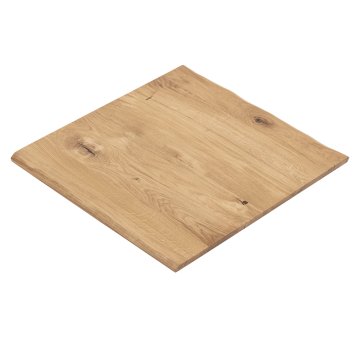
Solid oak displays a natural grain and can have different effects depending on finger-joint connections, straight edges, or rounded corners. Veneered versions offer a real wood surface on a dimensionally stable core board. Surfaces in an oak look can be useful if wiping is particularly frequent or if maintenance effort should remain low. Before purchasing, it should therefore be clear whether solid wood, veneer, or decor suits the business concept.
With solid wood, spilled liquids must be removed promptly. Standing moisture, aggressive cleaning chemicals, and very hot containers can affect the surface; mild cleaners, soft cloths, and suitable coasters are the safer solution in everyday use. Oiled surfaces can be maintained as needed depending on the version, while lacquered surfaces are usually easier to clean. For terraces, only tops explicitly designated for outdoor use are suitable. An oak look alone says nothing about weather resistance or UV stability.
Decision Criteria for Oak Table Tops
Four points are particularly relevant: Firstly, the shape determines whether the table is space-saving, communicative or designed for groups. Secondly, the external dimensions and actual top size must match the seating plan; for some models, the nominal and actual dimensions may differ slightly. Thirdly, top thickness and edge shape influence the effect – a 25-mm top appears lighter than a significantly thicker version or a construction with a metal frame. Fourthly, the surface determines care, feel and the possibility of refurbishment.
Quick Check
- Clearly define the place of use as indoor or outdoor area
- Select the format based on dishes and desired group size
- Coordinate edges and corners with walkways and tight table rows
- Check weight, top thickness and recommended frame size together
- Clarify care instructions and permissible cleaning agents before use
Assembly and Suitable Combinations
A table top only works with a suitable substructure. Contact area, recommended top size, weight and fixing points must match a model from the table frames category. For wood, veneer and other carrier materials, the intended screws and drilling depths must be observed to avoid damaging the surface. For larger rectangular tops, a wider base or a frame with two supports may be advisable.
For a harmonious overall look, oak table tops can be combined with black metal frames, wooden frames or subtle upholstery colours. Benches support longer stays in wall and niche zones, while movable chairs make quick rearrangement easier. Those who prefer complete solutions can compare the proportions with ready-made gastro tables.
Effect and Economic Classification
A well-maintained oak surface can convey quality, warmth and reliability. If shape, stability and spacing are properly planned, guests will use the table more comfortably and service can work more efficiently. This can support longer stays, additional orders or repeat visits; in high-traffic zones, a flexible table size can also facilitate rotation.
Oak table tops should therefore be selected as part of the overall spatial and operational concept. Not only colour and grain are decisive, but also care, frame compatibility, actual dimensions and the intended use for each time of day.



















