


 Request an offer











 Weinerpark 16 | 48607 Ochtrup | Germany









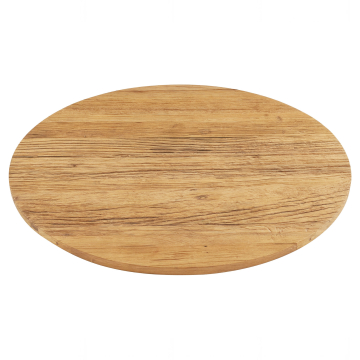

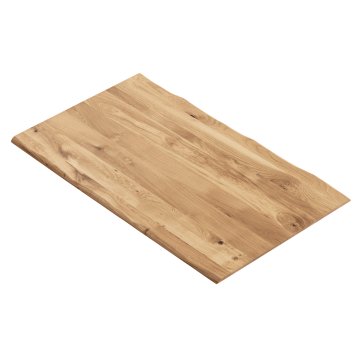


80 cm table tops
80 cm table tops offer sufficient space for complete place settings and comfortable service in restaurants, cafés and bistros. Round versions and square panels allow for different table arrangements.
 Filter
 Grid view
 Product view
 In line
 Masonry View
Correctly categorising 80 cm table tops
80 cm table tops are gastronomy table tops with a nominal size of 80 cm, usually as a square top measuring 80 x 80 cm or as a round version with a diameter of about 80 cm. The format offers more surface area than compact 60 or 70 cm tops and is suitable for full meals, several place settings and small groups.
Square versions make efficient use of wall and row areas and can be pushed together to form larger tables. Round table tops encourage an open seating arrangement, as there are no corners protruding into the room. For some models, the actual measurement may be slightly less than the nominal size; therefore, product data and space planning should be checked together.
Spatial effect and suitable areas of use
A table top with a width or diameter of 80 cm appears present without dominating the dining area like a large group table. Wood and walnut decors support a warm atmosphere, while marble looks, dark surfaces or metal edges can enhance an urban restaurant or bar image.
In the main dining area, this size is particularly suitable for two comfortable seats or, depending on seating and place settings, for small groups of four. Round versions work well in window areas and open zones, square 80 x 80 cm tops in table rows or niches. For terrace edges, only models whose material is expressly approved for outdoor use should be planned.
Planning for service routes and flexible seating
Planning for service routes and flexible seating
With an 80 cm footprint, the movement space around the table must also be taken into account. Chairs need space to be pushed back, guests must be able to get in comfortably and service staff should be able to pass with trays without bottlenecks. In narrow dining areas, a mix of 80 cm tops and smaller formats can improve zoning.
Square tops can be combined to form a table surface of 80 x 160 cm. For this, edges, heights and frames must be chosen so that the tables are flush and do not tip. Suitable table bases should offer a sufficiently large mounting plate, secure stability and enough legroom. With suitable chairs a system is created for lunch service, evening business and changing group sizes.
Materials, surfaces and assembly in everyday use
Depending on the model, HPL-coated panels, Compact-HPL, solid wood and other decorative surfaces are available. HPL is suitable for frequent wiping and high everyday use; Compact-HPL may be suitable for outdoor use depending on the model. Solid wood and variants with natural edges have a more pronounced material character, but require appropriate care.
Edge and panel thickness are also relevant. Thin versions appear light and modern, while variants with a thickness of 25, 27, 50 or 60 mm appear more solid depending on the construction. Black, chrome-coloured, gold-coloured or stainless steel-like edges should match luminaires, frames and fittings.
Before assembly, the drilling pattern, mounting surface and fasteners must be checked. Screws are not supplied with individual panels. Screw length and diameter must match the panel thickness to prevent damage to the surface and ensure a stable connection. For outdoor use, both panel and frame should be suitable for moisture, UV exposure and temperature fluctuations; suitable solutions can be found under Terrassenmöbel.
Decision criteria for 80 cm table tops
Four criteria are particularly important. Firstly, the shape determines whether the top is better placed in rows, against walls or freely in the room. Secondly, the actual dimensions determine how many place settings can be accommodated without crowding. Thirdly, material and surface must match the cleaning frequency, exposure to stains and the location. Fourthly, panel thickness, edge profile and frame mounting must be considered together to ensure proportion, stability and assembly are correct.
Quick-Check
- choose round or 80 x 80 cm to suit the floor plan
- compare actual size and desired number of place settings
- clearly check suitability for indoor or outdoor use
- consider panel thickness, edge and frame mounting together
- test flush alignment in a trial assembly
Combine harmoniously and plan economically
80 cm table tops can be combined with matching frames, seating and existing bistro tables to create a coherent overall look. Repeated decors and edges create calm, while different shapes separate quick zones and more comfortable seating areas from each other.
A stable, well-maintained table surface supports the perceived quality of the establishment. If guests feel comfortable, food and drinks have enough space and service routes work well, this can encourage longer stays, repeat orders and return visits. The potential economic effect arises from the interplay of use, care, stability and space planning.
The 80 cm format combines a generous table surface with flexible occupancy. It is crucial to choose shape, material and substructure as a functional table system.



















