


 Request an offer











 Weinerpark 16 | 48607 Ochtrup | Germany












Chesterfield restaurant benches for restaurants, bars and hotels
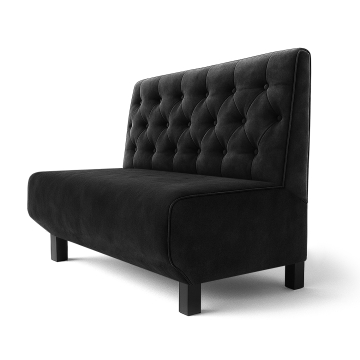
Chesterfield restaurant benches combine distinctive button-tufting with upholstered seating comfort for professional hospitality spaces. Choose suitable dimensions, colours and designs for booth niches, wall areas and prestigious seating areas.
 Filter
 GGM ansicht
 Grid view
 Product view
 In line
 Masonry View
Chesterfield restaurant benches as a defining element in the dining area
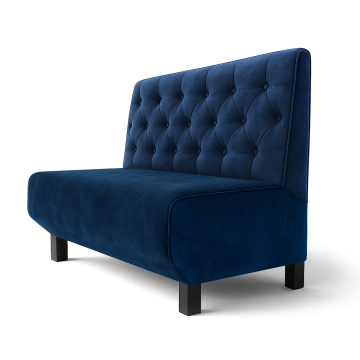
Chesterfield restaurant benches are upholstered benches whose backrests are characterised by deep, usually diamond-shaped button-tufting. They are mainly used in restaurants, bars, lounges and hotels where the furnishings are intended to support a classic, representative or striking spatial effect.
The structured back surfaces are particularly effective along a free wall or in a sheltered bench alcove. In a hotel bar, dark brown, green or Bordeaux tones can help create a calm evening atmosphere. In a smaller restaurant, a single Chesterfield bench can be used as a targeted eye-catcher without visually weighing down the entire room.
In addition to colour and upholstery, the design in particular determines the effect. High backrests separate seating groups more strongly, but require more wall space and can interrupt lines of sight. Lower variants appear more open and can be more easily integrated into compact dining areas.
Correctly planning dimensions, table distances and walkways
Before making a selection, the overall dimensions, seat height, seat depth and backrest height should be checked. The bench must match the height of the restaurant tables used so that guests can sit comfortably and have sufficient legroom. A seat that is too deep can be impractical at regular dining tables, while a seat that is too short reduces comfort during longer stays.
For wall benches, not only the pure bench width is decisive. Table frames, table top overhang and the space for getting in and out must also be taken into account. In heavily frequented passages to the kitchen or service point, chair backs and table edges should not protrude into the walkway.
Straight benches are suitable for clear seating rows. Corner solutions can make better use of existing alcoves, but must be measured precisely. For modules or interconnected bench elements, it should be checked how they are fixed to the floor, wall or to each other, and whether the subfloor is suitable for this.
Quick check for the suitable Chesterfield restaurant bench
- Does the seat height match the existing table height?
- Is the passageway sufficient even when tables are occupied?
- Is the button-tufting easily accessible for daily cleaning?
- Does the backrest height support the desired openness or separation?
- Are width and bench shape matched to typical group sizes?
Upholstery, Padding and Care in Daily Operations
The characteristic button-tufting creates more indentations and seams than a smooth upholstered surface. Crumbs, dust and liquids can therefore accumulate more easily. For establishments with high footfall, easy-care, hard-wearing covers and clearly defined cleaning routines are important.
Artificial leather can often be wiped clean quickly and is suitable for areas where drinks, sauces or grease stains may occur. Fabric covers offer a softer feel and can contribute to acoustic dampening, but require care tailored to the specific upholstery fabric. Care instructions for the material should always be checked before using cleaning chemicals. Special attention should be paid to edges, buttons, seams and areas near the floor that are prone to knocks.
The firmness of the padding should also suit the intended use. For a quick lunchtime turnover, a somewhat firmer, upright seating position may be advisable. For evening service, longer menus or a lounge area, a more comfortable padding is often preferred.
Considering Room Ambience and Cost-effectiveness Together
A stable, well-maintained and concept-appropriate bench contributes to the perceived quality of the entire dining area. If guests feel comfortably seated and can converse without disruptive crowding, this can encourage longer stays, repeat orders and return visits. However, the effect also depends on service, menu concept, acoustics and table arrangement.
Wall benches can make efficient use of available space and visually combine several seats into a calm unit. The decisive factor is not the maximum possible number of seats, but a balanced ratio of capacity, comfort and functional service routes. In addition to the purchase price, operators should therefore also consider cleaning effort, repairability, cover durability and possible repeat purchases.
Combining Chesterfield Benches Harmoniously
So that the button-tufting can have its full effect, other furnishing elements should be discreetly coordinated with it. Plain table tops, sturdy bases and simpler restaurant chairs prevent the room from appearing too restless. Dark wood supports a classic character, while light table surfaces or minimalist metal frames make the Chesterfield look appear more modern.
Lighting and acoustics also influence the result. Warm, targeted lighting accentuates the depth of the upholstery. In large rooms, however, the benches should only be considered as part of a comprehensive acoustic concept. For raised seating areas, specially coordinated bar-high benches are required; a regular restaurant bench is not automatically compatible with high tables.
Selecting Chesterfield Restaurant Benches to Suit Your Establishment
The right version depends on room size, table height, length of stay, cleaning effort and the desired style effect. Those who consider these factors together before purchasing will obtain a bench solution that not only convinces visually, but can also be used sensibly in daily operations.



















