


 Request an offer











 Weinerpark 16 | 48607 Ochtrup | Germany









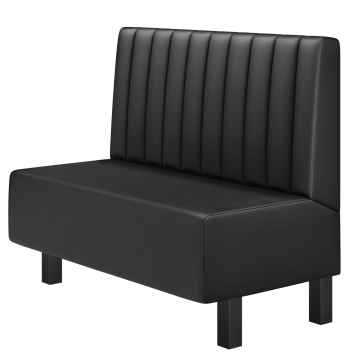
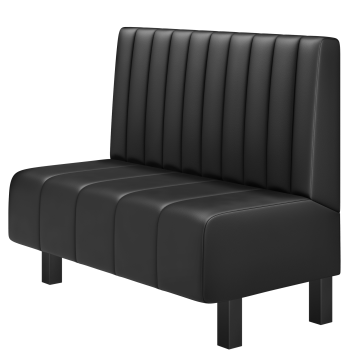
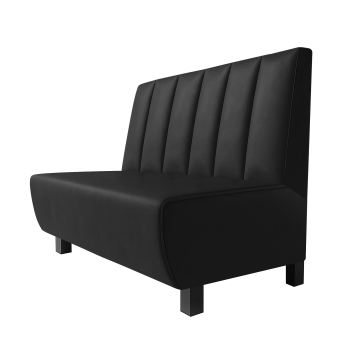
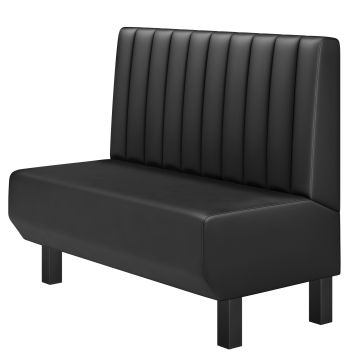
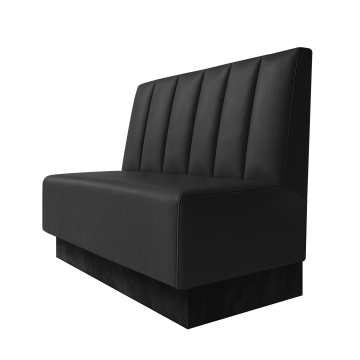
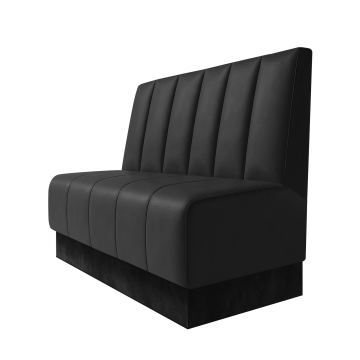
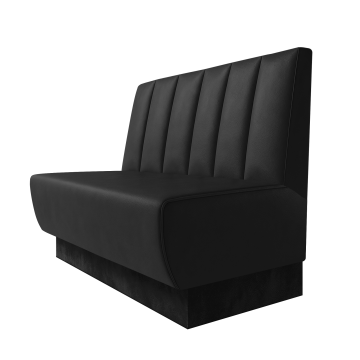


Striped restaurant benches for restaurants and cafés
Striped restaurant benches combine a clearly structured upholstered look with comfortable seating for restaurants, cafés, bars and hotels. Various widths, heights and colours make it easy to match your spatial concept and seating requirements.
 Filter
 GGM ansicht
 Grid view
 Product view
 In line
 Masonry View
Striped restaurant benches as a defining element in the dining area
Striped restaurant benches are upholstered benches whose backrests are structured by vertical seams or upholstery segments. Unlike multicoloured striped fabrics, the characteristic appearance is usually created by evenly spaced longitudinal stitching.
The vertical lines give long wall surfaces a clear structure and make the backrest appear visually higher. In a restaurant alcove, this creates an orderly seating area, while a continuous bench in the window area visually unites several tables. Depending on the colour and design, the striped look can appear modern, elegant, or reminiscent of classic diner interiors.
Narrow upholstery segments create a finer, more strongly structured surface. Wider stripes appear calmer and are particularly suitable for large wall sections. Dark colours such as black, bordeaux or dark green create strong accents. Beige, taupe or grey can be integrated more subtly into different room concepts.
Correctly coordinating dimensions and walkways
Before making a selection, bench width, backrest height, seat depth and table position should be considered together. A visually suitable bench only works in operation if guests can enter comfortably and the service staff has sufficient space to move.
For a wall row, the table edge and seat surface must be positioned so that there is enough legroom. Tables placed too close make it difficult to get in and out. Excessive distances, on the other hand, lead to an uncomfortable seating position. In passages to the kitchen or bar, it should also be checked whether pushed-back opposite chairs block the passageway.
High backrests can define alcoves more strongly and reduce visibility between adjacent seating groups. Lower models appear more open and are suitable where sightlines or a flexible spatial effect should be maintained. Suitable restaurant tables should therefore be selected not only according to design, but also according to height, tabletop size and base frame.
Choose upholstery and workmanship according to requirements
In the hospitality sector, seat surfaces and backrests are touched, moved and cleaned daily. The choice of upholstery should therefore be based on actual use. Faux leather can often be wiped clean quickly and is suitable for establishments with a high frequency of guests. Fabric and velvet surfaces offer a softer feel but require coordinated care.
Particularly relevant are:
- Resistance to stains and frequent wiping
- clean workmanship of the vertical seams
- protected edges in typical impact zones
- suitable cleaning agents for the respective upholstery
- stable connection between seat, backrest and base
Moisture should not remain permanently on seams or lower edges. When cleaning, it is advisable to follow the manufacturer's instructions and to test aggressive chemicals first in an inconspicuous area.
For modular or aligned elements, attention should also be paid to flush alignment. Screws and connection points must fit the substrate or the intended bench system so that there are no disturbing height differences between the elements.
Quick check for choosing striped hospitality benches
- Does the width of the upholstered stripes match the size of the wall area?
- Do seat depth and table distance allow for a comfortable seating position?
- Are service routes clear even when tables are fully occupied?
- Does the upholstery withstand the usual cleaning and soiling in the establishment?
- Do colour, backrest height and base harmonise with the room concept?
Comfort and cost-effectiveness in day-to-day operations
A well-maintained, stable and concept-appropriate interior influences how guests perceive an establishment. Comfortable padding, a supportive backrest and sufficient distance to neighbouring tables can promote a pleasant quality of stay. This is particularly relevant for longer evening visits or in quiet restaurant areas.
In fast lunchtime business, on the other hand, easy access, easily reachable tables and short cleaning times are important. The right striped hospitality bench should therefore not only be selected for its appearance, but also for the desired length of stay and table rotation.
Robust materials and reliable construction can reduce the need for repairs and replacements. Therefore, the most economical option is not automatically the cheapest model, but a version that brings requirements, maintenance effort and planned service life into a reasonable balance.
Combining striped hospitality benches harmoniously
A cohesive overall impression is created when the lines of the bench are coordinated with table tops, wall surfaces and lighting. Vertical upholstered segments can be well combined with calm table surfaces so that the room does not appear too restless. Hospitality chairs on the opposite side of the table should match the bench in terms of seat height, colour and material, without repeating its striped structure.
Near the counter, matching bar stools can pick up on the colour or material scheme. A clear hierarchy remains decisive: the striped bench forms the design focal point, while supplementary furniture remains restrained in shape and pattern.
In this way, striped hospitality benches support both spatial organisation and a comfortable, well-planned hospitality operation. The right choice results from the interplay of stripe width, colour, dimensions, upholstery, backrest height and operational processes



















