


 Request an offer











 Weinerpark 16 | 48607 Ochtrup | Germany









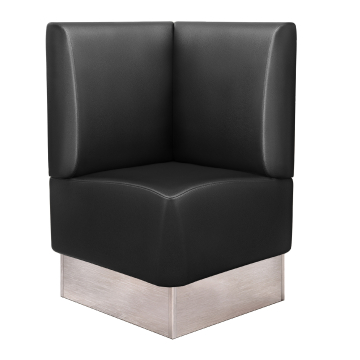


Smooth restaurant benches for gastronomy and hospitality
Smooth restaurant benches create clear, calm seating areas in restaurants, cafés, bars and hotels. Choose suitable dimensions, colours and versions for wall surfaces, niches and freely planned bench zones.
 Filter
 GGM ansicht
 Grid view
 Product view
 In line
 Masonry View
Smooth restaurant benches for a clear spatial effect
Smooth restaurant benches are upholstered benches for commercial use, whose seat and back surfaces are designed without prominent button tufting or heavy quilting. Their largely closed upholstered surfaces create an orderly, linear appearance and can be integrated into various gastronomy concepts.
Especially along longer wall surfaces, smooth restaurant benches appear calm and cohesive. In a window alcove, they create a clearly defined seating area without further structuring the space with striking upholstery patterns. Dark covers can support a compact, understated effect, while light or bold colours stand out evenly on the smooth surface.
Unlike heavily quilted or buttoned models, this version focuses on a flat design. This makes smooth restaurant benches particularly interesting for modern restaurants, cafés, bistros, and minimalist bar or hotel concepts.
Plan dimensions and walkways to suit your business
Before making a selection, bench length, seat depth, seat height and backrest height should be coordinated with the available space and the tables used. A long bench utilises wall surfaces efficiently, but must not restrict passageways, doors or access to service stations.
There must be sufficient legroom between the bench and the table. At the same time, the table should be positioned so that guests can enter and exit comfortably without disturbing adjacent seats. In passages to the kitchen or bar, generous service routes are particularly important, as staff regularly pass by with trays or crockery.
For small groups, clearly separated table sections along a continuous bench are suitable. For varying group sizes, several restaurant tables can be flexibly combined. What matters is not the maximum possible number of seats, but a balance of capacity, comfort and smooth operations.
Quick check for selecting smooth restaurant benches
- Does the bench length fit the wall or alcove without blocking passageways?
- Do seat height and seat depth match the intended tables?
- Is the backrest completely smooth or only partially without quilting?
- Is the cover suitable for typical stains and frequent cleaning?
- Do colour and plinth design support the existing room concept?
Select surface and upholstery according to level of use
The smooth upholstered surface shapes not only the appearance but also the maintenance effort. In high-traffic establishments, robust, wipeable covers are often advisable. Leatherette-like surfaces can usually be cleaned quickly, while fabric or velvet covers offer a different feel and spatial effect, but should be checked more closely for stain resistance and suitable cleaning agents.
Special attention should be paid to edges, seams and transitions to the base. These are the areas where knocks and dirt accumulate in everyday use, for example from shoes, vacuum cleaners or frequent mopping. Moisture should not remain on lower edges for extended periods. When cleaning, the care instructions for the respective cover must be observed, as aggressive cleaning chemicals can alter surfaces.
The substructure is also relevant. Closed bases create a calm appearance and prevent objects from collecting under the bench. Models with legs, on the other hand, make it easier to clean underneath depending on floor height. For multi-part bench rows, the elements should be aligned securely and fastened together or to the designated surface according to the manufacturer's instructions.
Comfort, room acoustics and length of stay
A restaurant bench should suit the typical length of stay. In a fast-paced lunchtime business, a more upright seating position can support the intended use. For longer evening visits, appropriate back support, sufficient padding and a comfortable seat depth are more important.
Upholstered surfaces can also help to dampen sound in the room. However, this effect always depends on other factors such as the floor, ceiling, curtains and wall surfaces. A smooth bench does not replace complete acoustic planning, but can be part of a balanced interior concept.
For additional seating options in the same area, suitable restaurant chairs can be used. This keeps table occupancy flexible, while the bench along the wall creates a consistent design line.
Well-maintained seating areas as an economic factor
Guests immediately notice stability, cleanliness and seating comfort. A coherent bench solution can help make the dining area appear organised and reliable. Combined with pleasant lighting, appropriate table spacing and efficient service routes, this supports the quality of stay.
Depending on the business concept, a comfortable seating situation can encourage longer stays and additional orders. In day-to-day operations, it is also important that surfaces can be cleaned quickly and places can be prepared again without much effort. Economic efficiency is therefore not determined solely by the purchase price, but also by maintenance effort, durability and a design that can be used in the long term.
Combine smooth restaurant benches harmoniously
For a consistent overall appearance, upholstery, colour, tabletop and substructure should be coordinated. A smooth bench with a subtle cover, for example, harmonises with striking tabletops, while colourful upholstered surfaces can become a defining design element in an otherwise understated room.
Suitable table frames should provide sufficient legroom and stand securely on the existing floor. In elevated seating areas, specially matched bar high benches are required; classic smooth restaurant benches are designed for standard-height restaurant tables.
Smooth restaurant benches are particularly suitable for businesses wishing to combine a clear upholstered look with comfortable seating planning. The decisive factors are suitable dimensions, business-appropriate upholstery, and positioning that takes into account guest routes, service and the overall spatial effect.



















