


 Request an offer











 Weinerpark 16 | 48607 Ochtrup | Germany









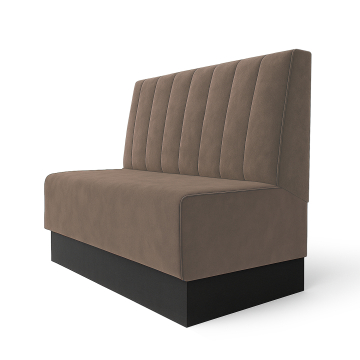

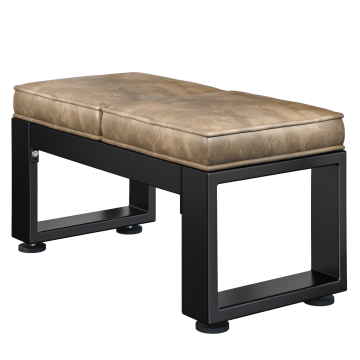


Beige restaurant benches for restaurants, cafés and hotels
Beige restaurant benches create cohesive seating areas for hospitality interiors and can be integrated in a variety of furnishing concepts. Choose suitable models according to shade, width, upholstery, backrest and desired seating comfort.
 Filter
 GGM ansicht
 Grid view
 Product view
 In line
 Masonry View
Beige restaurant benches as a calm foundation in the dining area
Beige restaurant benches bring brightness and visual calm to hospitality interiors without strongly dominating the room concept. Especially in alcoves, along long wall surfaces or in window areas, they create clearly recognisable seating areas and can be combined with dark tabletops, light wood, black or warm metal accents.
Beige restaurant benches are upholstered benches for commercial use, whose covers are executed in beige, cream, sand, greige or related natural tones. They are suitable for restaurants, cafés, bars and hotel areas when seating comfort, a cohesive style and the efficient use of wall or alcove spaces are required.
Select shade, cover and backrest appropriately
When choosing, it is not only the general colour designation that counts. The specific shade, type of cover, bench width, seat height and the design of the backrest are decisive. A light cream tone appears softer under warm evening light than under neutral lighting during the day. Taupe and greige create stronger contrasts, while sand beige harmonises particularly well with wood and earthy wall colours.
The surface also changes the style. Smooth back surfaces appear calm and modern. Vertical quilting or a double seam structure long bench rows without appearing too decorative. Chesterfield versions set a much more striking accent and are particularly suitable for concepts in which the bench is deliberately used as a design focal point.
Plan bench width, table distance and service routes
Restaurant benches use wall spaces efficiently, but can restrict walkways if table position and seat depth are not planned together. Therefore, check whether guests can get in and out comfortably without blocking the service route. There must be sufficient legroom and space to move between the table edge and the bench.
In longer rows, table widths and seats should be coordinated so that groups of two and four can be placed flexibly. In areas near the kitchen or in heavily used passages, the bench must not protrude into a collision zone. Plinths, side panels and outer corners are subject to greater stress there.
For wall and alcove solutions, the course of the wall, skirting boards and possible screw points should be checked in advance. Free-standing models require a stable stand and should not slip under lateral load.
Quick check for selection
- Does the beige shade match the floor, wall, tabletop and lighting?
- Is the bench width suitable for the planned table sizes?
- Are seat height, seat depth and back angle appropriate for the length of stay?
- Is the cover suitable for typical stains and cleaning agents?
- Are service routes and entry and exit sufficiently clear?
Easy-care surfaces for everyday gastronomy
Artificial leather is often suitable for establishments where surfaces need to be wiped quickly and regularly. For coffee, sauces, grease or drinks, surfaces with few joints and easily accessible seams are helpful. Fabric, woven fabric or velvet feel softer to the touch, but require closer inspection for stain resistance, abrasion and care instructions.
Especially on the front edges of seats, outer corners and skirting boards close to the floor, friction, moisture and contact with cleaning equipment occur in everyday use. Upholstery, seams and padding should therefore be suitable for the intended frequency of use. Also check which cleaning chemicals may be used and whether damaged components can be replaced if necessary.
Match seating comfort to daily business and guests
For a quick lunch service, a slightly more upright seating position can be sensible. In an evening restaurant or a quiet booth, the seat can be deeper and more heavily upholstered. The decision should be based on the average length of stay, the target group and the desired balance between comfort and table turnover.
A well-maintained, stable and harmoniously planned bench seat influences how guests perceive the space. Good legroom, a pleasant back support and a calm colour effect can contribute to seating being experienced as comfortable and of high quality. This can encourage longer stays, repeat orders and return visits, although no specific outcome can be guaranteed as a result.
Combine beige restaurant benches harmoniously
Beige restaurant benches appear particularly coherent when they are not selected in isolation. Match the bench to restaurant tables, table height and tabletop format. For mixed seating areas, suitable restaurant chairs in similar natural tones or in a deliberate contrast can be added.
In higher areas, it should be checked whether bar high benches match the respective counter or high table height. Additional upholstered chairs can pick up on the colour or upholstery structure without filling the entire room with bench elements. This creates a unified concept that also offers flexible places for small and larger groups.
Select beige restaurant benches according to requirements
Beige restaurant benches are suitable for bright, calm and versatile seating areas. A suitable solution always takes into account, in addition to colour and design, the room dimensions, table position, maintenance effort, frequency of use and the desired length of stay.



















