


 Request an offer











 Weinerpark 16 | 48607 Ochtrup | Germany









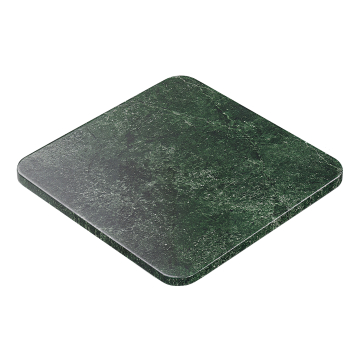
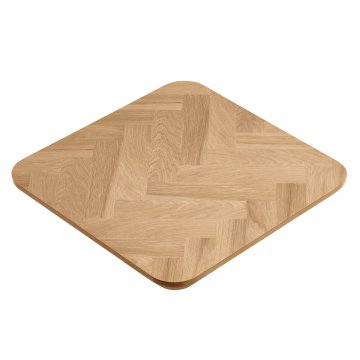

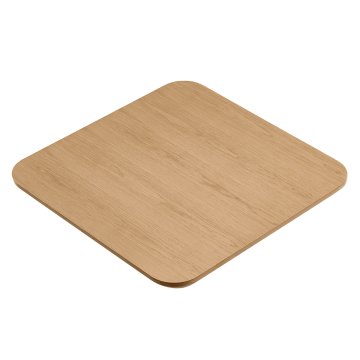

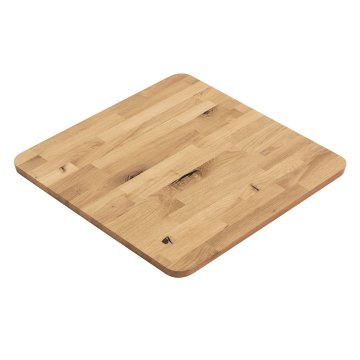
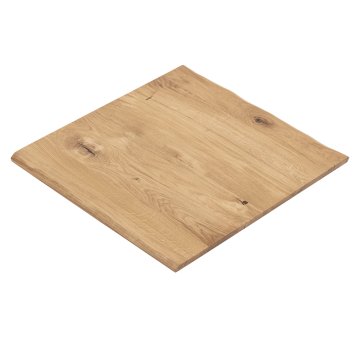


Small Table Tops
Small table tops create compact seating and storage areas for cafés, bistros, bars and restaurants. Various shapes, materials and dimensions enable needs-based planning for indoor and outdoor areas.
 Filter
 Grid view
 Product view
 In line
 Masonry View
Small tabletops clearly categorised
Small tabletops are compact table surfaces for hospitality seating with limited space requirements. Typical formats such as 60 x 60 cm, 70 x 70 cm or round with a diameter of about 60 cm are particularly suitable for one or two guests and can be combined with a matching base to create bistro or restaurant tables.
In the room, small formats appear light and orderly. Round tops support a softer line and fit well by windows, in alcoves or along terrace edges. Square tops make more efficient use of wall areas and straight table rows. Wood and oak decors create a warm, familiar effect; black, marble or anthracite looks provide clearer contrasts in modern cafés, bars and bistros.
Planning compact table surfaces in the dining area
Small tabletops make zoning easier, as individual two-person places can be specifically arranged between walkways, window fronts or existing seating groups. Two square tops can be pushed together for four guests if the grid allows. Round versions are less suitable for flush table groups, but reduce protruding corners in tight areas.
It is not only the nominal size of the top that is decisive. Chair backs, legroom, base feet and service routes also require space. A 60-x-60-cm top supports coffee, cake, drinks or small dishes; for full place settings, several plates or shared dishes, 70 x 70 cm may be the more practical everyday proportion. A trial setup with gastro chairs shows whether guests can stand up without blocking the passageway.
Materials and surfaces for daily use
The range includes small tabletops made of HPL, CDF, melamine, solid wood, oak veneer, polywood and sintered stone, among others. Not every material is suitable for every location. Coated indoor tops should only be used where the specific model is approved for this purpose; for terraces and outdoor seating, explicitly designated weatherproof tabletops are the proper choice.
In operation, short cleaning intervals, stain-resistant surfaces and robust edges are important. Coffee, grease, sugar and spilled drinks should be removed promptly. Mild cleaners and soft cloths protect many decors, while abrasive agents can attack edges and surfaces. For solid wood, appropriate care for the material is also important. For small formats, also check the actual product size: a nominal 60-x-60-cm top may be slightly smaller depending on the model.
Four criteria for selecting small table tops
Shape and groupability: Square tops can be more easily combined into larger table groups; round tops support compact single seating and an open spatial effect.
Usable surface: Match 60 x 60 cm, 70 x 70 cm or Ø 60 cm to your menu concept, crockery size and typical number of guests.
Location and care: Check suitability for indoor or outdoor use, surface texture, edge finish as well as compatibility with the cleaning chemicals used.
Substructure and assembly: Mounting area, screw points, top weight and permissible size must match the table bases. Fastening materials are not included with every top; screw type and length must be matched to the material and top thickness.
Quick check for small table tops
- Adapt table format to typical orders and two-person use
- Check actual dimensions rather than just the nominal size
- Plan sufficient space for chair movement and service routes
- Observe outdoor approval and care instructions for the specific model
- Compare base mounting and fastening before ordering
Harmoniously combining small table tops
A calm overall appearance is achieved when decor, edge and base are used repeatedly. Delicate substructures emphasise the compact effect, while more robust bases and thicker tops appear more prominent. In addition, complete bistro tables can be used where a pre-assembled or uniformly configured solution is more practical.
Well-maintained, stable table surfaces support the perception of quality and pleasant use. If guests feel comfortable, crockery and drinks have enough space and service routes remain clear, this can positively influence repeat orders, length of stay and return visits. However, the possible operational effect always arises in combination with the offering, service, time of day and room concept.
Small table tops are therefore particularly useful when compact surfaces are to be used flexibly, hygienically and without unnecessary crowding. Decisive factors are not only colour and shape, but the coordinated interplay of usable surface, material, substructure and location.



















