


 Request an offer











 Weinerpark 16 | 48607 Ochtrup | Germany









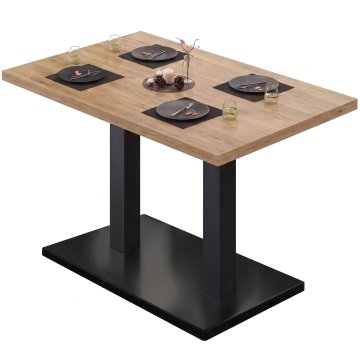
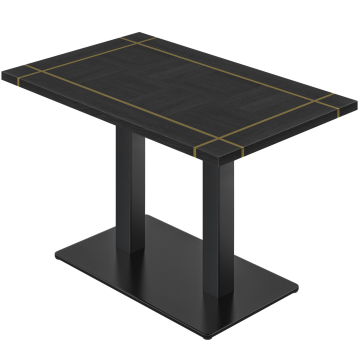
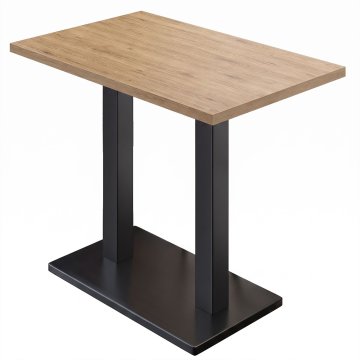


Rectangular Restaurant Tables
Rectangular restaurant tables offer a straight-lined tabletop for restaurants, cafés, and bistros and can be flexibly integrated into different room concepts. Various sizes, materials, and bases allow for a selection to suit group size and use.
 Filter
 Grid view
 Product view
 In line
 Masonry View
Rectangular restaurant tables for clear spatial structures
Rectangular restaurant tables are tables with an elongated, straight table surface for professional use in restaurants, cafés, bistros and comparable hospitality areas. Due to their shape, they can be arranged along walls, in table rows or as larger banqueting tables, making them particularly suitable for clearly structured guest areas.
The rectangular geometry supports a calm, orderly spatial effect and suits both modern and classic interior concepts. Formats such as 110 x 60 cm or 120 x 70 cm provide more usable space than small square tables and can be practical for several place settings, multi-course menus or larger orders. In window areas and along straight wall zones, the longer table side can be used specifically without creating unnecessary leftover spaces.
Dimensions, proportions and space requirements in the dining area
With rectangular restaurant tables, it is primarily the length, depth and substructure that determine how many guests can sit comfortably and how easily the service can pass by. A longer format offers additional space, but requires sufficient distance to the next table, to backrests and to walkways. Especially at the ends, it should be checked whether there is still enough passage when chairs are moved back.
Narrower rectangles can be practical for couples or compact groups of four. Larger formats are more suitable for groups or for establishments where several plates, serving platters and drinks are placed on the table at the same time. Several rectangular tables can also be combined into long rows, provided that edges, heights and frames match each other. Those who prefer smaller basic formats will also find suitable bistro tables.
Materials and surfaces for everyday gastronomy
In daily operations, not only appearance and feel count, but also cleanability and edge stability. HPL-coated or other robust, smooth surfaces are interesting for frequent wiping and typical stain exposure. Wood and wood-look finishes create a warmer spatial effect, while dark or stone-like decors can support straight-lined, modern concepts.
For heavily used table edges, attention should be paid to a durable finish, as the long sides in particular come into contact more frequently with chairs, crockery or cleaning equipment. For outdoor areas, only appropriately designated, weather- and moisture-resistant variants are suitable. If you plan the table top and substructure separately, you can combine suitable restaurant table tops with appropriate table bases. The size of the top, fixing points, frame width and intended mounting surface must all fit together to ensure the table remains stable.
Important decision criteria for rectangular restaurant tables
Four criteria should be particularly carefully checked when making a selection: Firstly, the proportion of length to depth, so that place settings and service ware have sufficient space. Secondly, the planned number of people, including possible seats at the ends. Thirdly, the position of the table legs or frame, as these affect legroom and chair space. Fourthly, the surface, suitable for cleaning frequency, soiling and indoor or outdoor use.
Quick-Check
- Select table length to suit typical group size
- Match table width to place settings, drinks and serving ware
- Include ends and chair clearance in the floor plan
- Check frame position for legroom and stability
- Select surface material according to maintenance requirements and location
Combination, use and economic impact
Rectangular restaurant tables can be easily combined with straight-lined chairs and support clear zoning between the main dining area, wall seating, and group sections. Uniform table heights and coordinated materials ensure that grouped tables also function visually as a single surface. Different lengths can also help tailor the seating mix to couples, groups of four, and larger parties.
A stable, well-maintained table arrangement that matches the room influences how guests perceive quality, comfort, and order. When there is enough space for food, tables do not wobble, and service routes work well, this can improve the quality of stay. If guests feel comfortable, they may stay longer depending on the concept, are more likely to order additional drinks or food, and are more likely to return. This can have a positive operational effect, although this cannot be guaranteed by table shape alone.
Rectangular restaurant tables are therefore particularly useful when space needs to be structured, group sizes flexibly accommodated, and straight room axes supported. The decisive factors remain the combination of suitable dimensions, durable surface, appropriate base, and sufficient space for movement.



















