


 Request an offer











 Weinerpark 16 | 48607 Ochtrup | Germany









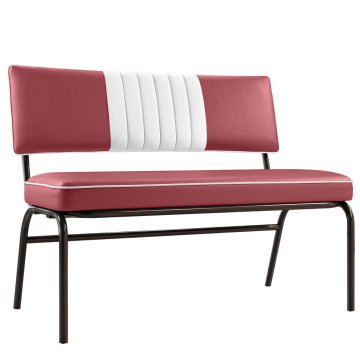
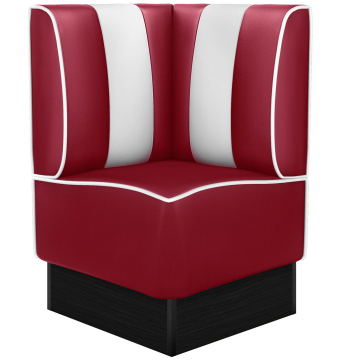
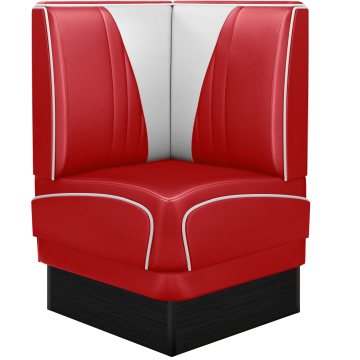

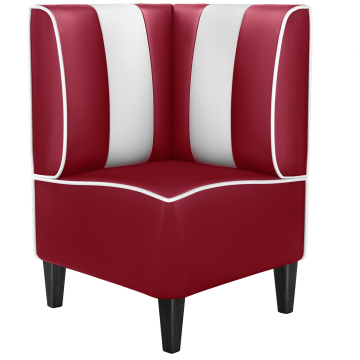
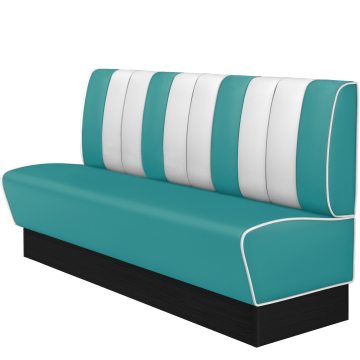


Diner Benches & American Diner Benches
A diner bench combines upholstered seating comfort with a distinctive retro look for restaurants, cafés, bars and leisure catering. Different widths, colours and upholstery designs allow targeted coordination with space, concept and seating requirements.
 Filter
 GGM ansicht
 Grid view
 Product view
 In line
 Masonry View
Diner benches set clear accents in the dining area
A diner bench is an upholstered restaurant bench with a typical American diner look, often featuring a high backrest, distinctive stitching, and a single- or two-tone cover. It is particularly suitable for establishments that want to clearly structure seating areas while implementing a recognisable retro concept.
Along a wall, straight bench elements create compact seating groups without chair backs protruding into the walkway. In a niche, a diner bench can form a sheltered area for couples or smaller groups. Double benches placed back-to-back, on the other hand, are suitable for dividing larger dining areas into several booths. High backrests create a clear visual separation without completely closing off the space.
Typical design features include vertical stripes, V-stitching, smooth back cushions, contrasting piping, and contrasting side panels. Bold combinations such as red-white or black-white define the classic diner look. Subtle colours can be used if the retro style is only intended as an accent and not as a complete theme concept.
Plan size, table spacing and walkways correctly
Before making a selection, it should be clarified how many people are to be seated on the diner bench and which table size is suitable. The bench width alone is not decisive. Seat depth, tabletop dimensions, legroom, and the distance to the opposite bench also influence whether the space works in daily operation.
With two diner benches facing each other, there must be enough space for guests to get in and out. The table should be positioned so that guests can sit comfortably, without the tabletop being too far from the backrest. At the same time, service staff in passages to the kitchen, at service stations, or in front of busy thoroughfares must not be obstructed by protruding table edges.
For varying group sizes, individual bench elements can be combined with flexible restaurant tables. Corner elements make targeted use of room corners, but are less flexible than straight benches. Double benches require free space, but can form two seating groups with a shared back section.
Quick check for the right diner bench
- Determine bench width and number of desired seats
- Check table height, tabletop depth, and legroom together
- Choose straight bench, corner solution or double bench according to room shape
- Select cover based on soiling, cleaning, and expected usage duration
- Measure service routes and entry area before ordering
Select upholstery and surfaces for everyday catering use
Diner benches are exposed daily to clothing, bags, food and drinks. The cover should therefore not only match the colour scheme, but also be suited to the typical demands of the business. Faux leather is of interest for many catering concepts, as the surface can usually be wiped clean quickly. In busy establishments, robust seams, sturdy piping and contact surfaces that are as insensitive as possible are particularly relevant.
Stains from sauces, grease, coffee or soft drinks should be removable promptly. It is important to check which cleaning agents the cover can tolerate. Moisture must not accumulate permanently at seams, plinth edges or transitions. In impact zones, such as narrow passageways, side panels and substructures should be sufficiently resistant.
For modular versions, connecting elements and screws must fit the intended arrangement. Especially with corner combinations or back-to-back solutions, a stable connection is important so that individual elements do not shift during operation.
Match seating comfort to your business concept
Seat height, upholstery firmness, seat depth and backrest shape influence use more than pure appearance. For a fast-paced burger restaurant, a more upright seating position may be appropriate. In an evening venue with longer stays, a well-supported backrest and comfortable padding are more important.
High backrests can make conversations within the seating group seem calmer and contribute to acoustic zoning. However, they do not replace comprehensive room acoustics. Upholstered surfaces, wall materials, floor and ceiling always interact.
For a harmonious overall look, diner benches should only be complemented with matching diner chairs or bar stools where the room layout and use require it. Colours, cover textures, tabletops and metal parts should be coordinated so that the dining area does not appear as a random mix of individual retro elements.
Diner benches as part of efficient space planning
A well-maintained, stable and appropriately sized diner bench can enhance the perception of the entire dining area. Guests recognise the furnishing concept more quickly, seating areas appear more clearly organised and heavily used wall surfaces can be integrated efficiently. A pleasant seat can also help ensure that guests rate their visit positively and return to the establishment.
For operators, it is not just the purchase price that counts. Maintenance effort, durability, reparability and the possibility of later additions influence costs over the period of use. A sensibly planned diner bench therefore combines design, seating comfort and operational function into a solution that must prove itself in daily use.



















